
Share
How Tariffs and Rising Prices Are Pushing Americans Deeper Into Credit Card Debt

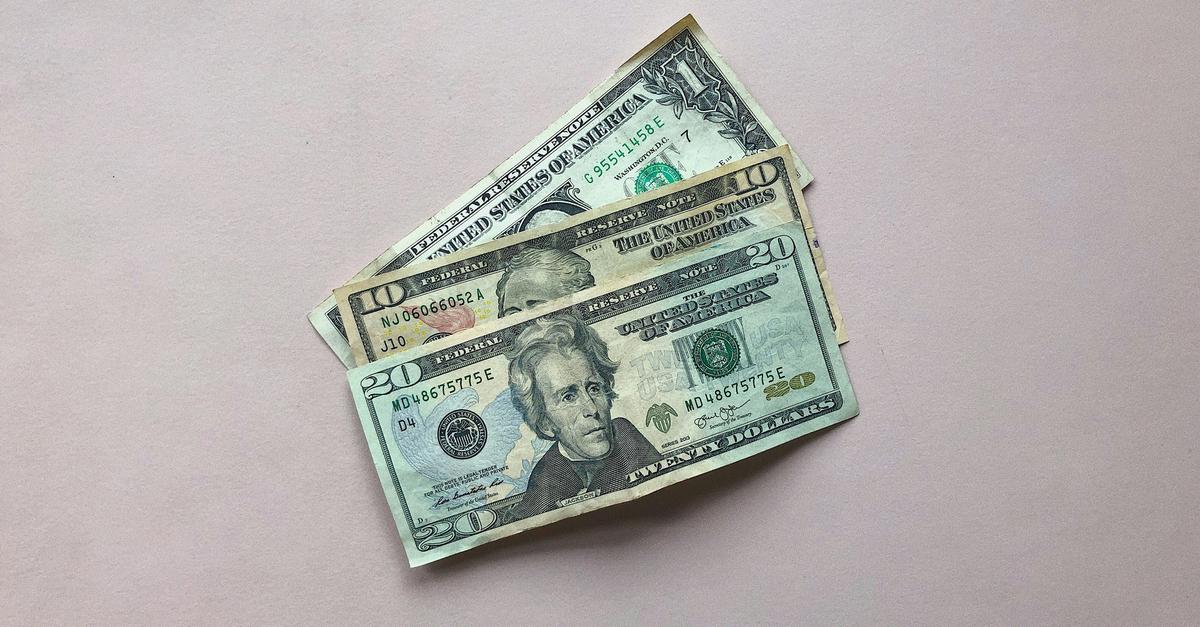
- 📋 Key Takeaways — Tariffs and rising prices are driving a new wave of credit card debt that looks different from anything we have seen before. Nearly half of Americans say tariffs have pushed them deeper into credit card debt — not because they changed how they spend, but because what they spend on costs more. Groceries, auto repairs, insurance, clothing, and household goods have all increased, and the gap between prices and paychecks is filling up on credit cards at 22% APR. A $3,000 annual increase in household costs becomes $3,700 when financed on credit cards — and that is just year one. If the gap persists and the first year's debt is still compounding, the balance grows exponentially. The strategies for addressing this kind of debt are different from the strategies for debt caused by overspending, because the underlying cause is not a behavior you can change. It is a price level that has changed around you.
The conversations we are having with people right now are different from the ones we were having two or three years ago. During the pandemic, people called because they lost jobs or faced medical emergencies. Today, the people contacting us have jobs. They have the same income they had two years ago. They have not changed how they spend. But their groceries cost more. Their car insurance went up. Their auto repairs cost more. And the gap between what they earn and what things cost has been filling up on credit cards at 22% APR. By the time they reach out, that gap has compounded into $15,000 or $25,000 in credit card debt that did not come from a single bad decision. It came from prices.
This article is not about trade policy. We are not economists and we are not going to pretend to be. This article is about what is happening to household budgets right now, how it is creating a specific type of credit card debt, and what your actual options are for dealing with it — because the standard advice written for people who overspent does not apply to people whose costs simply went up.
What Is Actually Happening to Prices
You do not need an economics degree to know that things cost more than they did 18 months ago. But the specific categories matter because they are the same categories showing up on credit card statements:
Groceries. A Council on Foreign Relations poll from January 2026 found that 73% of Americans across party lines are worried about being able to pay for groceries. Yale Budget Lab estimates food prices will increase by 1.4% in the short run from tariffs alone — on top of the 25%+ cumulative increase since 2020. That does not sound like a lot as a percentage. On a household spending $800 per month on groceries, it is $11 per month — $132 per year — just from tariffs, layered on top of increases that were already straining budgets.
Auto repairs and maintenance. Bureau of Labor Statistics data shows the motor vehicle maintenance and repair index rose approximately 6.9% over the past year — more than double the rate of overall consumer price increases. Many auto parts are imported, and tariffs on Chinese, Canadian, and Mexican goods have pushed replacement part costs higher. A brake job or a suspension repair that cost $600 a year ago may cost $640 to $660 now. When your car breaks down and you do not have $660 in cash, it goes on a credit card.
Clothing and apparel. Yale Budget Lab estimates that tariffs will increase apparel prices by 21% in the short term and 6% in the long term. Leather goods — shoes, handbags, belts — are projected to increase 23% in the short term. These are not luxury items for most families. They are school clothes, work shoes, and winter coats.
Insurance. While not directly tariff-driven, auto and home insurance premiums have risen sharply due to higher replacement costs for vehicles and building materials — both of which are affected by tariffs on imported steel, aluminum, and parts. The average household is paying significantly more for the same coverage.
Housing-related costs. Construction materials — lumber, steel, drywall, appliances — have been impacted by tariffs on imports. Home repairs and renovations cost more. Renters feel this indirectly through higher landlord costs that eventually flow into lease renewals.
None of these are discretionary purchases. Nobody is choosing to buy groceries as a luxury. Nobody is electing to get their brakes fixed for fun. These are costs that exist because you eat, because you drive to work, because you wear clothes, and because you live somewhere. When they all go up simultaneously and your paycheck does not, the math stops working.
How Price Increases Compound on Credit Cards
Here is where this becomes a credit card debt story rather than just an inflation story.
Research from The Kaplan Group analyzed the cost of tariffs when financed on credit cards. In a moderate tariff scenario, the average direct cost to households is approximately $1,200 per year. But when that $1,200 is put on a credit card at 22% APR and not paid off immediately, the interest begins compounding daily and the actual cost rises to over $1,400. In a high tariff scenario, the direct cost climbs to $3,000, but the real cost with credit card interest balloons to nearly $3,700.
And that is just year one. The math gets worse from there.
If the price gap persists — and there is no indication it will reverse — the same $3,000 gap repeats in year two. But now the first year's $3,700 is still on the card, still compounding. By the end of year two, you are carrying $7,000 to $8,000 in tariff-attributable credit card debt. By year three, $11,000 to $13,000. The compounding-on-compounding dynamic turns a manageable annual cost increase into a five-figure balance in just a few years — without a single discretionary purchase.
This is not theoretical. According to the Federal Reserve, revolving credit (primarily credit card debt) has been growing at an 8.2% annualized rate. NerdWallet's 2025 analysis found that the average household with revolving credit card debt now owes $11,413. Bankrate's survey found that 28% of credit card debtors attribute their balances to day-to-day expenses — groceries, childcare, utilities. Another 11% cite car repairs and 8% cite medical bills. These are exactly the categories where tariff-driven prices are hitting hardest.
Behavioral Debt vs. Structural Debt — and Why It Matters
Most debt advice assumes that credit card debt comes from spending decisions — choices you made that you could have made differently. That assumption drives the entire conventional playbook: make a budget, cut expenses, stop emotional spending, resist lifestyle inflation, build discipline.
That advice is valid when the debt comes from behavior. If you are carrying $15,000 because you booked trips you could not afford and bought things you did not need, changing the behavior is the core solution.
But tariff-driven debt is different. It is structural debt — debt caused by costs you cannot control rising faster than your income. The behavior did not change. The math changed. You bought the same groceries at the same store and spent $120 more per month. You got the same car repair and it cost $400 more. You renewed the same insurance and the premium was $600 higher per year. You did not make a single different decision. The decisions just cost more.
This distinction matters because the strategy changes:
For behavioral debt: Change the behavior first, then pay down the balance. If you do not fix the pattern, any payoff is temporary — the debt comes back.
For structural debt: The "behavior" is buying food and driving to work. You are not going to stop doing those things. The solution is either increasing income to match the new cost baseline, reducing the structural costs through assistance programs and negotiation, or resolving the accumulated debt through programs designed to eliminate balances that compounding has made unpayable through normal payments. Telling someone with structural debt to "stop overspending" is not advice. It is blame for a problem they did not create.
What to Do Right Now
1. Separate your structural costs from your discretionary spending
Use our budget calculator to categorize every monthly expense. Which costs are non-negotiable and have increased (groceries, gas, insurance, auto maintenance, utilities)? Which are genuinely discretionary and could be temporarily reduced (dining out, entertainment, subscriptions, non-essential shopping)? The structural costs are the ones driving your credit card balance — and addressing them requires different tools than cutting discretionary spending.
2. Reduce the structural costs you can influence
You cannot change the price of groceries. But you can reduce the total amount leaving your household each month through cost optimization that most people have not attempted:
Re-shop your auto and home insurance. Premiums have risen across the board, but the spread between providers has also widened. A 30-minute comparison can save $50 to $150 per month.
Apply for SNAP, LIHEAP, and utility assistance programs if your household qualifies. These programs exist to offset exactly the kind of cost pressure tariffs create. Income thresholds are higher than most people assume.
Refinance your auto loan if your rate is above current market. Credit union auto refinances can drop rates by 2 to 4 percentage points, reducing monthly payments by $30 to $80.
Negotiate phone, internet, and cable bills. Call each provider and request a rate review or retention offer. Success rates are surprisingly high — many providers would rather reduce your rate than lose you.
These moves collectively can free up $100 to $300 per month — money that was going to inflated structural costs and can now either reduce credit card reliance or accelerate debt payoff.
3. Stop financing structural costs on credit cards
This is the hardest step and the most important one. Every month that rising costs go on a credit card at 22% APR, you are paying for the price increase plus a 22% annual surcharge on top of it — compounding daily. If your income cannot cover current costs without a credit card, that is not a signal to keep swiping. It is a signal that you need to take one of two actions: increase income (overtime, second income source, tax withholding adjustment) or seek structured help with the accumulated balance so you can reset to the new cost baseline without dragging compound interest behind you.
4. Request hardship programs immediately
If tariff-driven costs have pushed you to minimum-payment-only territory on your credit cards, do not wait until you miss a payment. Call each issuer now and request a hardship program. Reduced interest rates and lower minimums free up cash within your existing budget — often $100 to $250 per month across multiple cards — without requiring you to earn additional income. This is the single highest-leverage call you can make.
5. Evaluate the accumulated balance honestly
If 12 to 24 months of rising costs have deposited $10,000 to $30,000 in credit card debt, run the numbers through our debt calculator. Enter the total balance, the average APR, and the maximum monthly payment your budget can realistically sustain. If the payoff timeline exceeds 5 years and the total cost (principal plus interest) exceeds the original balance, you are in the compounding trap — and the standard advice to "just pay more than the minimum" will not get you out of it.
At that point, the comparison becomes clear:
| Strategy | $20,000 in Accumulated Debt at 22% |
|---|---|
| Minimum payments | 30+ years, ~$43,000+ interest, ~$63,000 total |
| $600/month fixed | ~4 years 4 months, ~$11,100 interest, ~$31,100 total |
| Consolidation at 10% | 3 years, ~$3,232 interest, ~$23,232 total |
| Settlement at 50% | 2–4 years, ~$10,000–$12,000 total |
For debt that accumulated because prices went up — not because spending habits were reckless — resolving the balance through settlement or a structured debt relief program can eliminate the accumulated balance so you start fresh at the new cost baseline. That is a fundamentally different outcome from spending the next decade paying compound interest on groceries you bought in 2025.
Will Credit Card Interest Rates Come Down?
Maybe, but not fast enough to matter.
The Federal Reserve cut rates three times in the second half of 2025 and is projected to cut once more in 2026. Each cut reduces credit card APRs by approximately 0.25 percentage points. On a $20,000 balance, a quarter-point reduction saves roughly $50 per year in interest. That is not insignificant, but it does not change the fundamental math when you are paying $4,400 per year in interest at 22%.
In January 2025, President Trump called for a 10% cap on credit card interest rates, which would dramatically reduce the cost of carrying balances. The proposal has not advanced legislatively, and major banks and congressional leaders have opposed it. Even if enacted, implementation would take time. We covered the potential impact of a credit card interest rate cap in a separate analysis.
The practical takeaway: do not wait for rate cuts or legislation to solve the problem. If you are accumulating credit card debt because of rising prices, the compounding engine is running every single day at today's rates. Acting now — whether through hardship programs, accelerated payoff, or structured relief — costs less than waiting for rate relief that may or may not come and will be modest if it does.
The Rising Costs Debt Cycle — and How to Break It
The most dangerous pattern we see right now works like this: prices rise, so you put the difference on a credit card. Next month, prices are still elevated and you now have a credit card minimum payment on top of the higher prices. Your available budget shrinks further. More goes on the card. The balance grows. The minimum grows. The available budget shrinks again. Each month reinforces the next.
This cycle is different from the typical overspending cycle because the trigger never goes away. If you overspent on a vacation, you can choose not to book another one. If groceries cost $120 more per month than they used to, you cannot choose not to eat. The cycle feeds itself automatically as long as the price gap exists and credit cards are bridging it.
Breaking this cycle requires one of three things — and the right one depends on your situation:
Close the income gap. If the gap between your income and the new cost baseline is $200 to $400 per month, income additions — overtime, a temporary second income source, a tax withholding adjustment that increases your take-home pay — can close it. Once income meets expenses at the new price level, the credit card stops filling the gap and you can redirect payments toward the accumulated balance. This is the most sustainable solution when the gap is manageable.
Reduce structural costs below income. The cost-reduction strategies in the section above — insurance re-shopping, utility assistance, refinancing, food assistance programs — can collectively reduce your monthly outflow by $100 to $300. If that reduction is enough to close the gap, you no longer need credit cards to finance daily life. This approach requires effort but no lifestyle sacrifice beyond what you have already been enduring.
Resolve the accumulated balance and reset. If the gap has been running for 12 to 24 months and the accumulated credit card debt has grown to $10,000, $20,000, or more with daily compounding interest making it larger every day, closing the income gap alone does not solve the problem. You still have a five-figure balance at 22% APR generating hundreds of dollars per month in interest. At this point, structured resolution — hardship programs, settlement, or a debt relief program — eliminates the accumulated balance so you can start operating at the new cost level without dragging compound interest behind you. This is not giving up. It is acknowledging that the accumulated balance represents a math problem that compounding has made unsolvable through normal payments.
Protecting Yourself Going Forward
Whether tariffs remain, increase, or eventually decrease, the price levels they created are unlikely to fully reverse. Businesses that raised prices generally do not lower them when input costs decline — they absorb the margin improvement. This means the new cost baseline is likely permanent, even if the tariffs that caused it are not.
Given that reality, building a financial structure that can absorb the new cost level without credit card reliance is not optional. It is the foundation of staying out of debt after resolving whatever balance has accumulated:
Build an emergency fund. Even $1,000 to $2,000 prevents the next surprise expense from landing on a credit card. Our guide on building a $5,000 emergency fund covers the full plan. At the new cost baseline, the emergency fund is not a luxury. It is the barrier between you and the next round of credit card debt.
Adjust your budget to the new price level — not the old one. If you are still mentally budgeting $600 per month for groceries when the actual cost is $750, you are structurally guaranteed to run a deficit every month. Update every category to reflect what things actually cost today, then make decisions based on the real numbers.
Separate credit card use from essential spending. If possible, pay for groceries, gas, and essential purchases with a debit card or cash. Reserve credit cards for true emergencies or for purchases you can pay in full when the statement arrives. This creates a natural firewall between rising costs and revolving debt. It is not always possible — we understand that — but for every household that can make this shift, it eliminates the mechanism by which price increases become compounding credit card balances.
Revisit your cost-reduction strategies every 6 months. Insurance rates change. Assistance program thresholds change. New rate offers appear from phone and internet providers. Auto loan refinance rates shift with the Fed. The cost reductions you secured six months ago may not be the best available today. Treat cost optimization as an ongoing habit rather than a one-time exercise.
The Bottom Line
Tariffs and rising prices have created a new category of credit card debt — one that did not come from irresponsible spending but from costs rising faster than incomes. Nearly half of Americans report that tariffs have driven them deeper into debt. The groceries, auto repairs, insurance premiums, and household goods going on credit cards are not luxuries. They are the cost of living. And at 22% APR, financing that cost of living is a compounding trap that turns a $3,000 annual price increase into a five-figure credit card balance within a few years.
The path forward starts with separating what you can control from what you cannot, reducing structural costs where possible, calling your credit card issuers for hardship programs before you fall behind, and honestly evaluating whether the accumulated balance is payable through normal payments or requires structured resolution.
Use our debt calculator to see what your balance costs at your current payment level. Use our budget calculator to separate structural costs from discretionary spending. And if the numbers show that tariff-driven debt has accumulated past the point where payments can realistically catch up — schedule a free consultation. We will walk through your specific numbers and help you find the path that resolves the debt at the lowest total cost — so you can stop paying 22% interest on the price of groceries.
FAQs
Are tariffs making credit card debt worse?
Yes. A CardRates survey found that 47% of Americans say tariffs have driven them deeper into credit card debt. Bankrate reports that 65% believe tariffs will worsen their personal finances, and a CFR/Morning Consult poll found 73% are worried about grocery affordability. The mechanism is straightforward: tariffs increase the cost of imported goods, retailers pass those costs to consumers, and when paychecks do not cover the higher prices, the gap fills with credit card charges at 22% APR. The debt that results is not from overspending — it is from prices rising faster than income.
How much are tariffs costing the average household?
Estimates range from $1,200 to $3,000 per year depending on the tariff scenario, according to research from The Kaplan Group drawing on Federal Reserve, BLS, and Peterson Institute data. But those are direct costs. When financed on credit cards at 22% APR, the real cost rises to $1,400 to $3,700 in year one — and compounds from there if the balance is not paid off. Over two to three years of persistent price gaps, the credit card balance attributable to tariff-driven costs can reach $7,000 to $13,000 with compounding interest.
Will credit card interest rates go down in 2026?
The Federal Reserve is projected to cut rates once in 2026, which would reduce credit card APRs by approximately 0.25 percentage points. On a $20,000 balance, that saves roughly $50 per year. Three total cuts from the 2025-2026 cycle have reduced average APRs by about 0.75 percentage points from their peak — meaningful but not transformative. A $20,000 balance at 21.25% instead of 22% still costs over $4,000 per year in interest. The proposed 10% credit card interest rate cap has not advanced legislatively. Waiting for rate cuts while carrying high balances costs more in daily compounding than the eventual savings from lower rates.
What if I can't afford groceries without a credit card?
If your income does not cover essential expenses, the first step is applying for every assistance program available. SNAP benefits reduce grocery costs for qualifying households — and income thresholds are higher than most people realize. LIHEAP covers utility costs. Many states have additional food assistance programs. These are not last resorts — they are designed for exactly this situation. Simultaneously, re-shop insurance, negotiate phone and internet bills, and refinance any high-rate auto loans. The goal is to reduce total outflow enough that essential spending fits within income. If it still does not, contact your credit card issuers for hardship programs that lower your existing minimum payments — freeing up cash for essentials within your current budget.
Is this kind of debt different from overspending debt?
Yes, and the distinction matters for choosing a strategy. Debt from overspending requires behavioral change — cut the spending pattern and then pay down the balance. Debt from rising costs (structural debt) was not caused by a behavior you can change. You need groceries, gas, car repairs, and insurance regardless of their price. The strategy for structural debt focuses on closing the income-cost gap (through income increases and cost reduction programs), stopping the credit card reliance cycle, and resolving the accumulated balance through hardship programs, settlement, or structured relief if it has grown past what payments can realistically address.
Should I use a balance transfer card to deal with tariff-related credit card debt?
A balance transfer to a 0% APR card can freeze interest for 15 to 21 months, making your payments go entirely to principal. But you need a credit score of 700+ to qualify for the best offers, and your credit limit needs to accommodate the balance. If high utilization from tariff-driven spending has already lowered your score, you may not qualify. And critically — if the price gap is still running, you risk accumulating new charges on the original cards while trying to pay off the transferred balance. A balance transfer works best when the cause of the debt has stopped. If rising costs are ongoing, the transfer buys time but does not solve the structural problem.
Sources:
- CardRates.com, Tariffs and Credit Card Debt Survey (September 2025)
- Bankrate, Consumer Sentiment Survey on Tariffs (2025)
- Council on Foreign Relations / Morning Consult, Affordability Poll (January 2026)
- TransUnion, Consumer Tariff Impact Survey (2025)
- The Kaplan Group, "Impact of Tariffs on Consumer Debt" (April 2025)
- Yale Budget Lab, Tariff Price Impact Estimates (January 2026)
- Goldman Sachs, Consumer Tariff Cost Analysis (2025)
- Federal Reserve Board, Consumer Credit G.19 Report (Q4 2025)
- NerdWallet, 2025 Household Credit Card Debt Study (January 2026)
- Bureau of Labor Statistics, Motor Vehicle Maintenance and Repair Index (2025)
- Deloitte Insights, "US Tariffs Impact Consumer Spending" (May 2025)