Mortgages
Understanding Home Loans and How They Work

What Is a Mortgage?
A mortgage is a loan used to buy real estate — most commonly a home. The property itself serves as collateral, meaning the lender can foreclose on it if you stop making payments. In return, you get access to homeownership without needing to pay the full purchase price upfront.
Mortgages are one of the largest debt obligations most Americans will ever take on. The median home price in the U.S. has climbed steadily, and for the majority of buyers, financing is the only realistic path to ownership. Understanding how mortgages work — and how to manage them wisely — is essential for long-term financial health.
Unlike credit card debt or personal loans, mortgages are secured debt with relatively low interest rates. But "low" is relative — over a 30-year term, the total interest paid can exceed the original loan amount. That's why choosing the right loan type, rate, and payoff strategy matters enormously.
Types of Mortgages
Conventional 30-Year Fixed
The most popular mortgage in America. Your interest rate stays the same for the entire 30-year term, giving you predictable monthly payments. The trade-off is that you'll pay significantly more in total interest compared to shorter-term loans. On a $300,000 mortgage at 7%, you'd pay roughly $418,000 in interest alone over 30 years.
15-Year Fixed
Higher monthly payments but dramatically less interest over the life of the loan. Using the same $300,000 example at 6.5%, you'd pay about $170,000 in interest — less than half of the 30-year option. More consumers have been opting for 15-year terms as awareness of long-term interest costs has grown.
FHA Loans
Backed by the Federal Housing Administration, FHA loans are designed for first-time homebuyers and those with lower credit scores. They require as little as 3.5% down with a credit score of 580+. The trade-off is mandatory mortgage insurance premiums (MIP) for the life of the loan, which adds to your monthly payment.
Adjustable-Rate Mortgages (ARMs)
ARMs offer a lower initial interest rate that adjusts periodically after a fixed introductory period (typically 5, 7, or 10 years). They can make sense if you plan to sell or refinance before the rate adjusts, but they carry risk — if rates rise, your payments can increase substantially.
VA and USDA Loans
VA loans (for veterans and active military) and USDA loans (for rural homebuyers) offer unique benefits including zero down payment options and competitive rates. If you qualify, these are often the best mortgage products available.
What Affects Your Mortgage Rate?
Your interest rate determines how much you'll pay over the life of your loan. Even a 0.5% difference can mean tens of thousands of dollars. Several factors influence the rate you're offered.
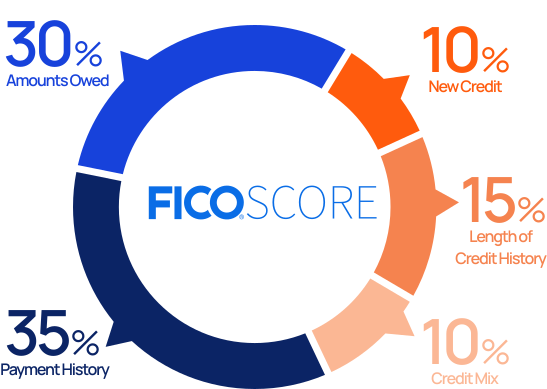
Your credit score is the single biggest factor. Borrowers with scores above 740 consistently get the best rates, while scores below 620 may struggle to qualify for conventional loans at all. If your credit needs work, visit our credit worthiness page for guidance on improving your score before applying.
Your down payment amount matters too. Putting down 20% or more eliminates the need for private mortgage insurance (PMI) and signals lower risk to lenders, which typically earns you a better rate. Debt-to-income ratio, employment history, the loan amount, and current market conditions all play a role as well.
Shopping around is essential. Rates can vary significantly between lenders for the same borrower profile. Get quotes from at least three lenders and compare the annual percentage rate (APR), which includes fees and gives you a more accurate picture of the true cost.

Strategies to Pay Off Your Mortgage Faster
Prepaying your mortgage is one of the most powerful ways to build wealth and reduce your total interest costs. Even small additional payments can make a dramatic difference over time.
Making one extra payment per year — either as a lump sum or by adding 1/12 of your monthly payment to each check — can shave 4-5 years off a 30-year mortgage and save tens of thousands in interest. On a $300,000 loan at 7%, that single extra annual payment saves approximately $85,000 in interest.
Biweekly payments are another strategy. Instead of 12 monthly payments, you make 26 half-payments per year — which equals 13 full payments annually. This accelerates your payoff without significantly impacting your monthly budget.
Refinancing to a shorter term is worth considering if rates have dropped since you originated your loan. Moving from a 30-year to a 15-year mortgage increases your monthly payment but cuts your total interest dramatically. Run the numbers with a mortgage calculator to see if the savings outweigh the higher payment.
Whatever strategy you choose, check your loan agreement for prepayment penalties first. Most conventional and FHA loans don't have them, but it's worth confirming.

Buying a Home Without a Mortgage
As interest rates have risen from their pandemic-era lows, more consumers are exploring the option of buying a home with cash. If you're in the fortunate position to do so, paying cash eliminates interest payments entirely, speeds up the closing process, and removes the monthly burden of a mortgage payment.
Cash buyers also have a significant advantage in competitive housing markets. Sellers prefer cash offers because they close faster and aren't contingent on mortgage approval. In bidding wars, a cash offer can beat a higher financed offer.
That said, tying up all your capital in a home has trade-offs. You lose liquidity and the potential returns you could earn by investing that money elsewhere. For most Americans, a mortgage remains the practical path to homeownership — the key is choosing the right loan and managing it strategically.

When Mortgage Debt Becomes a Problem
Mortgages are considered "good debt" because they're tied to an appreciating asset, but that doesn't mean they can't become overwhelming. Job loss, medical emergencies, divorce, or rate adjustments on ARMs can all push homeowners into financial distress.
If you're struggling to make payments, the worst thing you can do is ignore the problem. Contact your lender as soon as possible — most offer hardship options including forbearance (temporary pause or reduction in payments), loan modification (permanent change to loan terms), and repayment plans to help you catch up.
If your overall debt situation has become unmanageable — especially if you're juggling mortgage payments alongside high-interest credit card debt — it may be worth exploring your options. Our debt relief program helps consumers eliminate unsecured debt like credit cards, freeing up cash flow to stay current on essential obligations like your mortgage. Schedule a free consultation to see if it's the right fit for your situation.
Frequently Asked Questions About Mortgages
What is a mortgage?
A mortgage is a loan used to purchase real estate, where the property itself serves as collateral. You make monthly payments of principal and interest over a set term — typically 15 or 30 years — until the loan is paid in full.
What credit score do I need to get a mortgage?
Conventional loans typically require a minimum credit score of 620. FHA loans are more flexible, accepting scores as low as 580 with a 3.5% down payment, or 500 with 10% down. The higher your score, the better your interest rate.
What is the difference between a fixed-rate and adjustable-rate mortgage?
A fixed-rate mortgage locks in the same interest rate for the entire loan term, giving you predictable monthly payments. An adjustable-rate mortgage (ARM) starts with a lower rate that changes periodically based on market conditions — payments can go up or down after the initial fixed period.
How much should I put down on a home?
A 20% down payment is ideal because it eliminates the need for private mortgage insurance (PMI). However, many loan programs allow much less — FHA loans require as little as 3.5%, and some conventional loans accept 3-5% down.
Can I pay off my mortgage early?
Yes. Making extra payments toward your principal can save you tens of thousands in interest and shave years off your loan term. Check your loan agreement for any prepayment penalties, though most conventional and FHA loans do not have them.
What happens if I fall behind on mortgage payments?
Missing mortgage payments triggers late fees and negative credit reporting. After 90-120 days of missed payments, your lender may begin foreclosure proceedings. If you're struggling, contact your lender immediately — most offer forbearance or loan modification options.
Ready to take control of your mortgage debt?
Schedule a free consultation — no upfront fees, no obligations.
Get a Free Consultation