
Share
Do You Still Owe After a Car Repossession? The Deficiency Balance Nobody Warns You About

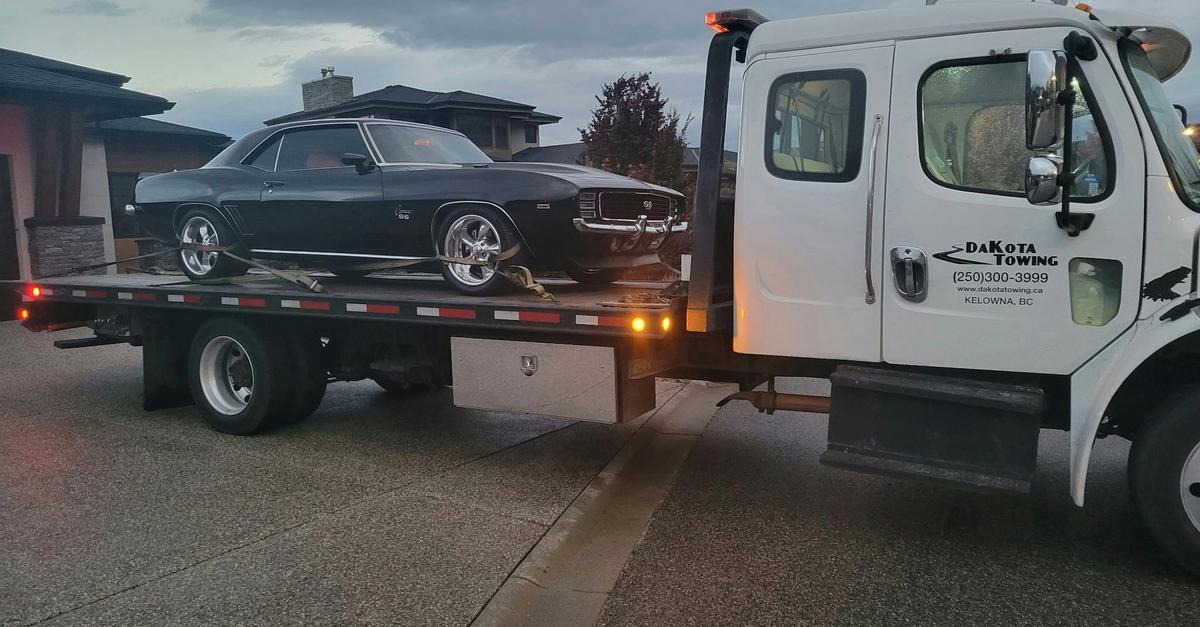
- 📋 Key Takeaways — The hardest thing to learn after a car repossession is that losing the car doesn't end the debt. The lender sells the repossessed vehicle at auction — typically for 30-50% of its retail value — applies the proceeds to your loan, adds towing, storage, and auction fees, and bills you for whatever is left. That leftover is the "deficiency balance," and it's frequently $8,000-$13,000 or more. With nearly 3 in 10 trade-ins now underwater (negative equity at levels not seen in years, per Edmunds), deficiencies are bigger than ever. But here's the part almost no one explains, and it's the most important: once the car is gone, the deficiency is no longer secured by anything — it's ordinary unsecured debt. And unsecured debt can be settled, the same way credit card debt is settled, often for 40-60% of the balance. This article explains how the deficiency is calculated, your rights around the sale (which can sometimes reduce or eliminate what you owe), and how to resolve a deficiency balance — usually alongside the credit card debt that tends to come with it.
This article is for people dealing with the debt that remains after a car repossession — the deficiency balance. The car is gone, and then a bill arrives for thousands of dollars you didn't expect to owe, often followed by collection calls. It's one of the most disorienting situations in consumer finance, because it violates the thing everyone assumes: that giving back the car settles the account.
At The Debt Relief Company, we work with people carrying deficiency balances regularly — and very often, the deficiency comes packaged with credit card debt, because the same financial squeeze that caused the car payments to stop usually ran up the cards too. The good news, and the thing this article is built around, is that a deficiency balance is far more resolvable than most people realize once they understand what it actually is.
Let me be clear about scope upfront: TDRC resolves unsecured debt, which includes deficiency balances after a repossession and credit card debt. We don't handle the repossession itself (by the time there's a deficiency, that's done), getting you into a new car loan (that's a lender), the legal challenge to a wrongful sale (that's a consumer attorney), or a bankruptcy filing (a bankruptcy attorney). We help with the deficiency balance and the credit card debt that so often comes with it.
The Shock: The Car Is Gone and You Still Owe
The single most common and most costly misconception about repossession is "they took the car, so we're even." It isn't true, and the gap between that assumption and reality is where the financial damage lives.
Here's what actually happens. When you fall behind, the lender repossesses the vehicle (the loan agreement gave them a lien allowing exactly that). They then sell it — usually at a wholesale auto auction — and apply the sale proceeds to your loan balance. But auctions are wholesale markets: vehicles routinely sell for only 30-50% of their retail value. The lender then adds the costs of repossession (towing, storage, auction fees) on top. Whatever is still owed after the auction proceeds are applied and the fees are added is the deficiency balance — and you're on the hook for it.
Per Nolo's analysis of deficiency balances, the math works like this: say you owed $12,000 when you defaulted. The lender repossesses the car and sells it at auction for $3,500, with $150 in repossession and auction fees. Your deficiency would be $8,650 ($12,000 − $3,500 + $150). On a more expensive vehicle the numbers get worse — owe $25,000, the car sells for $12,000 at auction, and you're left with a $13,000+ deficiency plus fees and interest.
Per Upsolve's analysis, this is the rule, not the exception: repossession doesn't erase your debt, and if the car sells for less than you owe — which happens regularly — you're responsible for the remaining amount, including the added fees. A repossession also typically drops your credit score substantially and stays on your credit report for seven years.
Why Deficiencies Are Bigger Than Ever: The Negative-Equity Epidemic
Deficiency balances are larger today than they've been in years, and the reason is negative equity — owing more on a car than it's worth. When you're already underwater and the car gets repossessed, the deficiency is bigger because the loan balance was inflated relative to the car's value to begin with.
Per Edmunds data reported in late 2025, nearly three in ten vehicles traded in toward a new purchase in the fourth quarter of 2025 were "underwater" — meaning the owners owed more on their loans than the vehicles were worth — with negative equity surging to levels not seen in years. The average amount of negative equity has been running around $6,754.
Several forces drove this: years of high car prices, long loan terms (72- and 84-month loans that build equity slowly), small or zero down payments, and the common practice of rolling negative equity from one car loan into the next. The result is that a large share of borrowers are carrying loans bigger than their cars are worth — so when repossession happens, the deficiency is steep. If you're in this situation, you're part of a very large group, and the resolution paths below apply regardless of how the negative equity built up.
The Key Insight: A Deficiency Is Now Unsecured Debt — and Unsecured Debt Can Be Settled
This is the most important section, and it's the thing the bankruptcy explainers and the subprime-car-loan sites never frame clearly.
While you were making payments, your car loan was secured debt — backed by collateral (the car). Secured debt is hard to negotiate down, because the lender can always take the collateral. But once the car has been repossessed and sold, that collateral is gone. The deficiency balance that remains isn't secured by anything anymore. It's ordinary unsecured debt — the same category as credit card debt.
That single fact changes everything about how you can resolve it. Unsecured debt can be settled. The lender (or, more often, the collection agency that buys or is assigned the deficiency) frequently accepts a lump sum or structured settlement for less than the full balance — commonly in the 40-60% range, the same dynamics covered in our guide on how major creditors settle debt. A deficiency balance sitting with a collection agency is, from a settlement standpoint, very similar to a charged-off credit card balance: the holder paid little or nothing for it and would rather collect something than chase you indefinitely.
So the reframe is this: a $10,000 deficiency on a car you no longer have isn't a uniquely terrifying obligation tied to a vanished asset. It's $10,000 of unsecured debt, resolvable through the same structural paths as any other unsecured debt — settlement, a repayment plan, or in extreme cases bankruptcy. The car being gone is emotionally jarring, but financially it's what makes the debt negotiable.
Your Rights Around the Sale (Which Can Reduce or Eliminate the Deficiency)
Before you accept a deficiency balance at face value, there's a consumer-protection angle most people never check. Lenders have to follow specific rules when they repossess and sell a car, and if they didn't, the deficiency can be reduced or even wiped out.
Under the Uniform Commercial Code (Article 9), which governs secured transactions in most states, two requirements matter most:
- Proper notice. Per Nolo, the lender generally must send you notice before selling the car, telling you the date, time, and location of a public sale (or the date after which a private sale will occur), and the notice must tell you whether you're liable for a deficiency and how to find out the amount. If they failed to send proper notice, your deficiency liability may be reduced or eliminated.
- A commercially reasonable sale. The lender must dispose of the car in a "commercially reasonable" manner. If they sold it for far below a reasonable price, or in a way designed to fetch a lowball figure, you may be able to challenge the deficiency on the grounds that a commercially reasonable sale would have left a smaller balance — or none.
You also typically have the right to "redeem" the vehicle before sale by paying the full balance plus costs, and the right to attend and bid at a public auction. These are time-sensitive and rarely practical when money is tight, but they're worth knowing.
If you suspect the lender botched the notice or sold the car unreasonably, this is a matter for a consumer attorney, not a debt resolution company — but raising it can change what you owe. Many people simply pay (or get sued for) the full deficiency without ever checking whether the lender followed the rules.
Voluntary vs. Involuntary Repossession (A Common Misconception)
Some people surrender the car voluntarily, believing it avoids the debt or is a clean way out. It's worth being clear: voluntary repossession still leaves a deficiency balance. Handing back the keys doesn't make the remaining debt disappear.
Voluntary surrender can have modest advantages — it may reduce some repossession fees (no repo agent had to locate and tow the car), and it's sometimes less jarring than an involuntary repo. But the core financial outcome is the same: the lender sells the car, applies the proceeds, adds fees, and bills you for the deficiency. Both voluntary and involuntary repossession also damage your credit similarly.
If you're considering voluntary surrender because you genuinely can't afford the car, one option that often beats it is selling the car yourself before repossession. A private sale typically brings far more than a wholesale auction — meaning a smaller deficiency, or none. If the private sale doesn't fully cover the loan, you'll still owe the difference, but it's usually less than what an auction would have left. This only works if you act before the lender repossesses, and if the car isn't so far underwater that a private sale can't help.
The Combined-Debt Reality
In our experience, a deficiency balance rarely shows up alone. The same financial pressure that caused someone to fall behind on a car payment — a job loss, a medical event, reduced hours, a divorce — usually ran up credit card balances too, often because the cards were covering essentials once the budget broke. By the time the car is repossessed, there's frequently a deficiency balance and several thousand dollars in credit card debt.
This is actually where resolution gets more efficient, not less. Because the deficiency is now unsecured debt, it can be resolved together with the credit card debt in a single settlement program — one strategy, one monthly deposit, one process covering all of it. The deficiency balance and the Visa balance and the store card all get treated as what they now are: unsecured debts to be negotiated down. If credit cards were covering your basic costs in the run-up, our guide on using credit cards to cover living expenses covers that pattern, and where to start when you're drowning in debt lays out the first steps.
Combined with average credit card APRs of 21-24% per the Federal Reserve G.19 report, leaving that credit card debt to compound while you also face a deficiency is the worst case — which is why addressing them together, promptly, matters.
Resolution Paths for a Deficiency Balance
Once you understand the deficiency is unsecured debt, the resolution options are the familiar structural ones. The right path depends on the total unsecured debt (deficiency plus any credit card balances) and your income:
| Total Unsecured Debt | Situation | Likely Best Path |
|---|---|---|
| Smaller deficiency, no other debt | Stable income | Negotiate directly with the lender/collector, or a repayment arrangement |
| $10,000-$25,000 (deficiency + cards) | Stable income, want to preserve credit | DMP (cards) + negotiated deficiency payoff |
| $15,000-$50,000 (deficiency + cards) | Reduced income, can't pay in full | Settlement at 40-60% covering deficiency + cards together |
| Very large, plus other obligations | No realistic repayment path | Chapter 7 bankruptcy consultation |
A few deficiency-specific considerations:
- Check the lender's compliance first. Before settling, it's worth confirming the lender sent proper notice and sold the car reasonably (above). If they didn't, your starting position in any negotiation is much stronger — or the deficiency may not be fully collectible at all.
- Watch for a deficiency lawsuit. If the deficiency goes unaddressed, the lender or collector can sue, and a judgment can lead to wage garnishment in many states. Our guide on whether a creditor will sue you covers the lawsuit dynamics, which apply to deficiency balances much like credit card debt. Addressing the deficiency before it reaches a judgment keeps your options open.
- Settle the deficiency and the cards together. Because both are unsecured, a single settlement strategy covering everything is usually more efficient than handling them separately. Our guide on negotiating debt on your own applies to deficiency balances too, if you prefer the DIY route.
- Mind the statute of limitations and credit reporting. Like other debts, a deficiency has a statute of limitations (varies by state) and falls off your credit report after seven years — dynamics covered in what happens to debt after seven years. Don't let a collector pressure you into "restarting the clock" on time-barred debt without understanding what you're agreeing to.
For a parallel on prioritizing when you owe multiple kinds of debt at once, our guide on which debts to pay first covers the triage logic.
What TDRC Handles, What Requires Other Professionals
Honest scope clarity:
What TDRC handles: Resolution of the deficiency balance after a repossession (now unsecured debt) and any accompanying credit card debt — through settlement and structural strategy, typically resolving everything together.
What TDRC does NOT handle:
- The repossession itself. By the time there's a deficiency, the repossession is complete — there's nothing to undo.
- Challenging a wrongful sale or defective notice. If you believe the lender violated the notice or commercially-reasonable requirements, that's a matter for a consumer attorney — and it can reduce or eliminate the deficiency.
- Getting you into a new car loan. That's a lender's role. (Be cautious about subprime "buy-here-pay-here" loans right after a repo — they often carry punishing terms.)
- Bankruptcy filings. If the total debt is overwhelming, a consumer bankruptcy attorney; Chapter 7 can discharge a deficiency balance.
- The underlying auto loan questions. For general auto-loan basics, see our explainer on what an auto loan is.
If you have a deficiency balance after a repossession — with or without credit card debt alongside it — and want to discuss resolving it, schedule a consultation. We'll give you an honest read on the deficiency and any other unsecured debt, and we'll flag if it's worth having an attorney check whether the lender followed the rules before you settle.
The Bottom Line
A car repossession doesn't end the debt — it usually creates a new, jarring one. The lender sells the car at auction for a fraction of its value, adds fees, and bills you for the deficiency, which routinely runs $8,000-$13,000 or more, and which is larger than ever now that nearly a third of borrowers are underwater on their loans.
But the most important thing to understand is also the most reassuring: once the car is gone, the deficiency is no longer secured by anything. It's ordinary unsecured debt — the same as credit card debt — and unsecured debt can be settled, commonly for 40-60% of the balance. Before you settle, it's worth checking whether the lender sent proper notice and sold the car in a commercially reasonable way, because if they didn't, you may owe less or nothing. And because a deficiency almost always comes packaged with credit card debt, the efficient move is to resolve all of it together in a single strategy.
Use our debt calculator to see what the total debt costs over time, our budget calculator to map your situation against a resolution plan, and schedule a consultation when you're ready. For a challenge to a wrongful sale, a consumer attorney; for a new vehicle, a reputable lender — not the first buy-here-pay-here lot that approves you.
The car being gone feels like the disaster. Financially, it's the thing that turned a loan you couldn't escape into a debt you can actually resolve.
FAQs
Do I still owe money after my car is repossessed?
Yes, almost always. The lender sells your repossessed car — usually at a wholesale auction for only 30-50% of its retail value — applies the proceeds to your loan, adds repossession, towing, storage, and auction fees, and bills you for whatever remains. That remaining amount is the "deficiency balance," and you're legally responsible for it. Per Nolo's example: owe $12,000, the car sells for $3,500 with $150 in fees, and you owe an $8,650 deficiency. On a more expensive car the gap is larger. Repossession doesn't erase the debt — it usually creates a new, unexpected one, and it also drops your credit score and stays on your report for seven years.
How is a deficiency balance calculated?
Deficiency = (loan balance at default) − (auction sale price) + (repossession, storage, and auction fees), plus any accrued interest. Because auctions are wholesale markets where cars sell for 30-50% of retail, the sale rarely covers the loan — especially if you had negative equity (owed more than the car was worth) going in. Per Edmunds, nearly 3 in 10 trade-ins were underwater in late 2025, with average negative equity around $6,754, which is why deficiencies are bigger than ever. Example: owe $25,000, car auctions for $12,000, and you're left with a $13,000+ deficiency.
Can a deficiency balance be settled or negotiated down?
Yes — and this is the key point most people miss. While you were paying the loan, it was secured debt (backed by the car), which is hard to negotiate. But once the car is repossessed and sold, the collateral is gone, and the deficiency becomes ordinary unsecured debt — the same category as credit card debt. Unsecured debt can be settled, commonly for 40-60% of the balance, especially once it's with a collection agency that paid little for it. So a deficiency balance is far more resolvable than it feels: it's just unsecured debt, resolvable through settlement, a repayment plan, or (in extreme cases) bankruptcy.
Does voluntary repossession (giving the car back) avoid the debt?
No. Voluntary surrender still leaves a deficiency balance — handing back the keys doesn't make the remaining debt disappear. The lender still sells the car, adds fees, and bills you for the shortfall, and your credit is damaged similarly to an involuntary repo. Voluntary surrender may reduce some fees (no repo agent had to locate and tow the car), but the core outcome is the same. Often a better option, if you act before repossession, is selling the car yourself — a private sale typically brings far more than a wholesale auction, meaning a smaller deficiency or none.
Can I get out of paying the deficiency balance entirely?
Sometimes, on two grounds. First, the lender must send proper notice before selling the car (date, time, location of the sale, and whether you owe a deficiency) — if they didn't, your deficiency liability may be reduced or eliminated. Second, the sale must be "commercially reasonable" under the Uniform Commercial Code; if the lender sold the car for far below a reasonable price or in an improper way, you may be able to challenge the deficiency. These are matters for a consumer attorney, not a debt settlement company, but they're worth checking before you pay or settle — many people pay the full deficiency without ever confirming the lender followed the rules. Bankruptcy (Chapter 7) can also discharge a deficiency balance entirely.
I have a deficiency balance AND credit card debt. How do I handle both?
Together, in one strategy — which is usually more efficient than handling them separately. The same financial squeeze that caused the repossession often ran up credit card balances too, and because the deficiency is now unsecured debt just like the cards, all of it can be resolved in a single settlement program: one approach, one monthly deposit, one process. Depending on the total and your income: negotiate directly for a smaller standalone deficiency; a debt management plan plus negotiated deficiency payoff for moderate stable-income situations; settlement at 40-60% covering everything for larger debt with reduced income; or bankruptcy if it's overwhelming.
Sources (cited inline throughout article):
- Nolo, "Deficiency Balances After Repossession" (deficiency math, notice requirements, commercially-reasonable standard) — https://www.nolo.com/legal-encyclopedia/deficiency-balances-after-repossession.html
- Upsolve, "Do I Still Owe Money After My Car Is Repossessed?" (repossession doesn't erase debt; resolution options) — https://upsolve.org/learn/owe-after-repossession/
- AOL / Edmunds, "Nearly 1 in 3 Americans Are Underwater on Their Car Loans" (Q4 2025 negative equity at record levels) — https://www.aol.com/lifestyle/nearly-1-3-americans-underwater-210028620.html
- Federal Reserve G.19, Consumer Credit (average CC APR 21-24%) — https://www.federalreserve.gov/releases/g19/current/
- Uniform Commercial Code (Article 9) and CFPB consumer rights on repossession — referenced as attributed factual statements (notice + commercially-reasonable-sale requirements)