
Share
Credit Card Debt from Crypto and Investment Losses: How to Resolve What You Bet and Lost

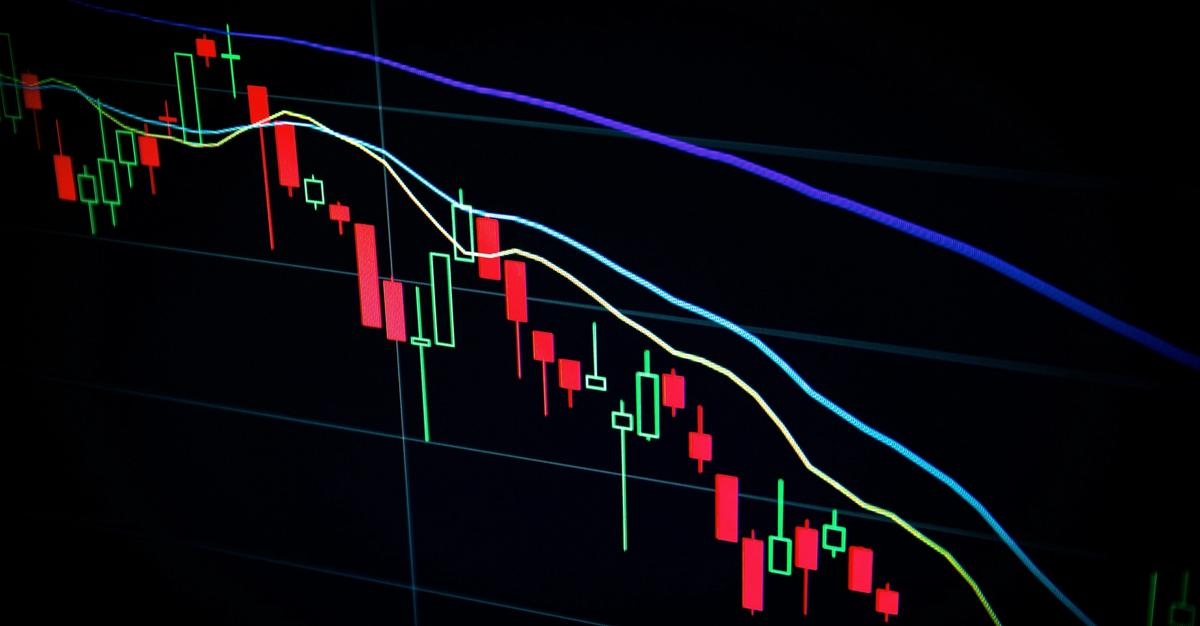
- 📋 Key Takeaways — Credit card debt from crypto and stock market losses has become one of the most underrecognized categories of consumer debt — and one of the most resolvable, once the trading stops. Per LendingTree's 2023 crypto investor survey, 38% of investors lost more money on crypto than they made and 19% borrowed money to invest. Per Interactive Investor research, 23% of young investors used credit cards specifically to fund crypto purchases. The hard rule that no resolution program can work around: the trading has to stop first. If you are still "averaging down" with credit cards on positions that have already lost 50% or more, no settlement program can resolve faster than the next bull-run-then-correction cycle can rebuild new debt. The capital losses do offset taxes — but only $3,000 against ordinary income per year, which is meaningful but nowhere near enough to compensate for 24% APR on $40,000 in credit card debt. The resolution paths are the same as for any unsecured debt (hardship, DMP, settlement, bankruptcy in extreme cases), but for this debt type, bankruptcy is more often the right answer because the balances are often very large relative to income and accumulated rapidly.
This article is for the investor who borrowed against credit to buy crypto, stocks, options, or other speculative investments — and now holds significant credit card debt while the underlying positions are worth far less than what was paid for them. It happens in every market cycle. It happened in the 2017 bull run. It happened during the meme stock and crypto frenzy of 2021. It is happening now in 2026 as retail investors who got in during the 2024-2025 bull run watch their leveraged positions correct.
At The Debt Relief Company, we work with clients who have credit card debt — that is our scope. Increasingly, we work with clients whose debt accumulated specifically through investment losses funded by credit. The integrated approach matters because the resolution requires both stopping the bleeding (no more trading on credit) and resolving the existing debt structurally — and most public conversations about crypto and stock losses focus on the trading psychology side without addressing the resolution mechanics.
Like our article on credit card debt from sports betting and gambling, this article opens with the same hard rule: the bleeding has to stop before the resolution work can succeed. If you are still actively day trading, averaging down on losing positions with credit, or moving balances around to fund the next "buy the dip" opportunity, please stop reading and call a fee-only financial advisor or, if the trading feels compulsive, the National Council on Problem Gambling helpline at 1-800-GAMBLER. Trading addiction shares clinical characteristics with gambling addiction and warrants the same kind of treatment.
The Scale of the Problem
Per the 2023 LendingTree crypto investor survey, 38% of crypto investors had lost more money on crypto than they had made, and 19% had borrowed money specifically to invest in crypto. The same survey noted that 40% of all investors (not just crypto) have borrowed money to invest at some point — meaning credit-funded investment is a much broader phenomenon than crypto alone.
The pattern repeats across market cycles. CNBC reported in 2018 that 1 in 5 consumers who bought Bitcoin with a credit card had not yet paid off the debt. Interactive Investor research cited that among young investors (ages 18-29), more than half had turned to debt to fund crypto investments — 23% specifically using credit cards, 17% using student loans, and 16% using other loans.
The 2026 cycle is producing a fresh wave. Per recent market analysis, retail investors maxed out credit cards during the 2024-2025 bull run, took out personal loans, and used crypto lending platforms — all on the assumption that prices only go up. When Bitcoin and altcoin positions correct 30-50%+, the leverage that looked smart in the bull run becomes the wreckage of the bear cycle. The investors who borrowed are often left with significant credit card debt, depreciated holdings that may or may not recover, and tax implications that don't fully offset the damage.
Total U.S. credit card debt reached a record $1.28 trillion at the end of 2025 per the Federal Reserve Bank of New York, with the average credit card APR at 21-24% per the Federal Reserve G.19 report. A meaningful portion of that total is investment-loss-related debt that gets categorized in the data as ordinary credit card debt — but has a fundamentally different psychological and structural profile than debt accumulated for living expenses.
How This Debt Actually Accumulates
Understanding the mechanics matters because it explains why this debt accumulates faster than typical consumer debt and why traditional resolution approaches need adjustment for investment-loss cases.
Credit card cash advances to fund exchange deposits. The worst path. Cash advances typically carry 27-29% APR (higher than purchase APR), have no grace period (interest accrues from day one), and include a 3-5% transaction fee. Per our guide on the cash advance trap, this is one of the worst structures in consumer finance. When the cash advance funds a leveraged crypto trade that loses 50%, the debt is now growing at 27-29% on a balance worth half of what was borrowed.
Direct credit card purchases on exchanges. Some platforms allow direct credit card purchases of crypto (with 3-5% transaction fees on top of standard credit card APR). The transaction fees alone are substantial. Per CFTC consumer protection guidance, many issuers also code these as cash advances even when the platform processes them as purchases — meaning the cash advance APR and fees may apply.
"Averaging down" with credit. The pattern that catches the most disciplined investors. After a position loses 30%, the temptation is to add to it at the lower price to reduce average cost basis. If cash isn't available, credit cards provide the funding. The new purchase loses another 20%. The next "average down" doubles the credit card balance. By the time the position is closed, the credit card debt is often 2-3x the original investment loss.
Margin and leverage on traditional brokerages. Margin loans are typically lower-cost than credit cards (5-12% APR depending on broker and balance), but they come with margin call risk. When positions decline, brokers issue margin calls that must be met within hours or the broker liquidates the position at the worst possible moment. Investors facing margin calls often pull cash from credit cards to meet the call — converting margin debt at 8% to credit card debt at 24% with no improvement in the underlying position.
Crypto lending platforms (now mostly defunct). Celsius, BlockFi, FTX, Voyager, and similar platforms allowed users to borrow against crypto holdings or earn yield by lending crypto. Many of these platforms collapsed in 2022, with billions in customer assets frozen or lost in bankruptcy. Investors who used these platforms to fund credit card payoffs or other obligations now have credit card debt restored AND lost crypto holdings — a double hit. Recovery of frozen assets through bankruptcy proceedings continues but typically returns a fraction of original deposits.
HELOC-then-credit-card cascades. The pattern in older investors. First the cash savings get used. Then a HELOC against the home. Then credit cards as the position keeps declining. By the time it stops, the investor has multiple debt vehicles funding what should have been a small speculative allocation.
The Denial Cycle
Investment losses produce denial in a way that other debt sources don't. The internal narrative goes: "It'll come back. I'm in for the long term. This is just paper losses." For someone with $40,000 in credit card debt at 24% APR funding crypto positions worth $15,000, the math doesn't care about long-term theses.
The math: $40,000 in credit card debt at 24% APR with minimum payments costs approximately $9,600 per year in interest alone. Across the typical 27-year minimum-payment timeline (covered in our guide on why your credit card balance never goes down), the total cost of carrying that debt exceeds $90,000.
For the underlying $15,000 crypto position to "come back" and make the math work, it would need to grow to approximately $40,000 (covering the principal) PLUS at least another $50,000 in growth (covering the interest carry) — a 6x return on the depreciated position. Even in optimistic crypto scenarios, this is a high bar. And every month of waiting for it costs $800 in interest while the credit card balance grows.
The honest reframe for most investors in this situation: the position is sunk cost. The credit card debt is the actual problem. Selling the depreciated position and using whatever recovery exists to pay down the credit card debt is almost always better than holding both indefinitely. The decision is hard psychologically because it forces acknowledgment of the loss as real rather than paper. But the math is unambiguous.
The Tax Treatment Creates a Second Problem
Capital losses on crypto and stocks have some tax value, but rarely enough to offset the cost of credit card debt funding the losses.
Per IRS Topic 409 on capital gains and losses, capital losses can offset capital gains in the year incurred without limit. Net capital losses in excess of gains can offset up to $3,000 of ordinary income per year ($1,500 for married filing separately), with the remaining loss carried forward to future tax years indefinitely. Crypto is treated as property by the IRS for tax purposes, so the same rules that apply to stock losses apply to crypto losses.
The math for someone with $50,000 in crypto losses and $40,000 in credit card debt:
If they have no offsetting capital gains, the loss reduces ordinary income by $3,000 per year over approximately 17 years (until the loss is fully used). At a 22% marginal tax bracket, that's approximately $660 per year in tax savings — for a total of roughly $11,200 across the carry-forward period. Useful. But the credit card debt carries $9,600 in interest in just the first year, and over $90,000 total across the typical minimum-payment timeline. The tax savings recover roughly 12% of the credit card carry cost. Not nothing, but not nearly enough.
The trap: investors who try to pay off the credit card debt by selling appreciated assets often create NEW capital gains taxes that partially offset the deductible losses. The integrated tax planning gets complex. For investors with significant capital losses AND credit card debt AND other appreciated assets that might be sold to pay down the debt, a CPA or enrolled agent should map the optimal sequence rather than DIY-ing it.
Resolution Paths by Debt Level
| Debt Level | Income Profile | Likely Best Path |
|---|---|---|
| Under $10,000 | Stable income | Hardship program + aggressive self-payment after closing positions |
| $10,000-$25,000 | Stable income, want to preserve credit | DMP through nonprofit credit counseling, 3-5 year repayment |
| $25,000-$60,000 | Income won't fully repay before retirement or other priorities | Settlement at 40-60% over 24-36 months |
| $60,000+ | Limited income, few assets to protect, often younger investors | Chapter 7 bankruptcy consultation strongly recommended |
For investment-loss debt specifically, the bankruptcy consideration applies more often than for typical consumer debt. The reasons mirror the gambling debt analysis: balances are often very large relative to income, accumulated rapidly, and the investor is often younger (under 40) with limited assets to protect. Chapter 7 typically discharges credit card debt completely in 3-6 months. Settlement takes 24-36 months and resolves the debt at 40-60% of balance. For investors with $60,000+ in investment-loss credit card debt and modest income going forward, bankruptcy is often the cleaner path.
Important caveat: any creditor can theoretically challenge the discharge of debt incurred shortly before bankruptcy if the spending pattern looks abusive (luxury purchases within 90 days of filing are presumed non-dischargeable up to $725 per creditor). Most credit card debt accumulated over months or years of investment activity is dischargeable, but a bankruptcy attorney should evaluate the specific timing and pattern in any individual case.
Trading Addiction: Recognizing When This Is Bigger Than a Bad Decision
Some investors who lost on crypto or stocks made a single bad decision and learned from it. Others have a clinical pattern that more closely resembles gambling addiction — and the resolution work has to address both the debt and the underlying behavior.
Signs that warrant clinical attention:
- Trading or checking positions multiple times per hour, including during work, sleep, or social events
- Lying to family members about the size of positions or losses
- "Chasing losses" — increasing position sizes after losses to "get back to even"
- Using credit, retirement accounts, or borrowed funds to continue trading after substantial losses
- Inability to stop trading despite stated intention to do so
- Trading-related anxiety, sleep loss, or relationship strain
- Restlessness or irritability when not trading
- Trading to escape stress, relationship problems, or other emotional difficulties
If multiple of these patterns apply, the relevant resources are similar to those for gambling addiction. The National Council on Problem Gambling (1-800-GAMBLER) can connect callers to behavioral addiction specialists. Gamblers Anonymous addresses trading addiction in its scope alongside traditional gambling. SMART Recovery has online programs specifically addressing problematic trading. Some specialized therapists work with financial behavioral addictions specifically.
Self-imposed structural safeguards that work for investors trying to break the pattern: closing brokerage accounts entirely (or moving to advisor-managed accounts where you cannot self-direct), using tools that block crypto exchanges and trading apps from your devices, having a spouse or accountability partner with read-only access to your accounts, and cooling-off periods enforced by your broker on new positions or deposits.
What TDRC Handles, What We Do Not
Honest scope clarity:
What TDRC handles: Resolution of credit card debt and unsecured consumer debt, including the credit card balances accumulated to fund investment positions, cover margin calls, or replace funds drained from savings. We can negotiate with creditors using documented financial hardship as leverage.
What TDRC does not handle: Investment advice (consult a fee-only fiduciary financial advisor — never a commission-based product seller). Tax planning for capital losses (consult a CPA or enrolled agent). Bankruptcy filings (consult a consumer bankruptcy attorney). Trading addiction treatment (consult mental health professionals or call 1-800-GAMBLER for behavioral addiction resources). Recovery of frozen crypto assets from defunct exchanges (consult a securities attorney).
If your debt is primarily credit cards used to fund investment positions, the trading has stopped, and you want to discuss resolution: schedule a consultation. We will evaluate your specific debt picture and the realistic paths forward. We will not pretend to handle the trading psychology side or the investment recovery side — those require different professionals working in parallel.
The Bottom Line
Credit card debt from crypto and investment losses follows the same playbook as other unsecured debt resolution, with two key differences. First, the trading has to stop before the resolution work can succeed — otherwise the debt rebuilds faster than any program can resolve it. Second, the balances are often very large relative to income, which shifts the resolution calculus toward more aggressive options (settlement or bankruptcy) rather than long-term repayment plans.
The honest framework: stop trading. Close depreciated positions and accept the realized losses (the tax treatment provides some offset, but not enough to justify holding indefinitely). Address the credit card debt structurally based on the debt level and your income trajectory. Build the safeguards that prevent recurrence — closed accounts, blocking apps, accountability partners, and continuing treatment if trading patterns approach addiction territory.
Use our debt calculator to see what your current debt costs over time, our budget calculator to map your post-loss financial reality, and schedule a consultation when the trading has stopped and you're ready to address the debt structurally. The losses are real. The shame is real. So is the resolution path.
Credit Card Debt from Crypto and Investment Losses: How to Resolve What You Bet and Lost
Meta Title: Credit Card Debt from Crypto and Investment Losses: How to Resolve It Meta Description: Debt relief CEO Adem Selita walks through credit card debt from crypto and stock losses — the unique mechanics, the denial cycle, the tax treatment that helps but doesn't compensate, and the resolution paths that work after the trading stops. Target Keyword: credit card debt crypto investment losses Secondary Keywords: credit card debt from bitcoin losses, crypto loss credit card, paying off crypto debt, stock trading credit card debt, investment loss debt resolution, margin call credit card debt Slug: credit-card-debt-crypto-investment-losses
FAQs
Can I get out of credit card debt from crypto losses without quitting trading?
No. Like our gambling debt article makes clear about gambling, the same rule applies to investment trading: the bleeding has to stop before the resolution work can succeed. Settlement programs, debt management plans, and bankruptcy do not work if you continue to add to losing positions with credit. The market will produce reasons to "buy the dip" with cards you can't afford to use, and the debt rebuilds faster than any program can resolve it. If you recognize compulsive trading patterns (multiple trades per hour, lying about losses, chasing losses with credit), the National Council on Problem Gambling helpline (1-800-GAMBLER) addresses behavioral trading addiction alongside traditional gambling.
Can credit card debt from crypto losses be discharged in bankruptcy?
Generally yes, with one important caveat. Credit card debt from investment losses is unsecured debt and can typically be discharged in Chapter 7 bankruptcy. The caveat: any creditor can theoretically challenge discharge if the spending pattern looks abusive immediately before filing (luxury purchases within 90 days are presumed non-dischargeable up to $725 per creditor). For credit card debt accumulated over months or years of investment activity, dischargeability is generally not contested. For investors with $60,000+ in investment-loss credit card debt and modest income going forward, bankruptcy is often the cleaner path than settlement.
Can I deduct my crypto losses from my taxes?
Yes, but with limits. Per IRS Topic 409, capital losses can offset capital gains in the year incurred without limit. Net capital losses in excess of gains can offset up to $3,000 of ordinary income per year, with the remaining loss carried forward to future tax years indefinitely. Crypto is treated as property (not currency) by the IRS for tax purposes. The math: $50,000 in losses with no offsetting gains saves approximately $660 per year in taxes for someone in the 22% bracket — useful, but nowhere near enough to compensate for the credit card interest carry on $40,000 of debt funding those losses ($9,600 in the first year alone). Consult a CPA or enrolled agent for your specific situation.
Should I sell my depreciated crypto position to pay off the credit card debt?
For most people in this situation, yes. The math is unambiguous: holding $15,000 in depreciated crypto while carrying $40,000 in 24% APR credit card debt costs approximately $9,600 per year in interest. For the position to "come back" enough to cover both the principal and the interest carry, it would need to roughly 6x from current levels — a high bar even in optimistic scenarios. Selling the position, accepting the realized loss for tax purposes, and using the proceeds to pay down the high-interest debt is mathematically and psychologically cleaner than waiting indefinitely for unrealized gains that may not materialize.
What's the difference between credit card debt from crypto losses and from gambling?
Mechanically, similar. Both involve speculative wagers funded by high-interest credit, with high failure rates and rapid debt accumulation. Psychologically, different framing — investment language ("portfolio," "long-term hold," "averaging down") provides cognitive distance that gambling language doesn't. But the practitioner truth is the same: the trading or betting has to stop first; the debt resolution is the same structural framework (hardship, DMP, settlement, bankruptcy); and bankruptcy is more often the right answer than for typical consumer debt because balances are large relative to income. Trading addiction is increasingly recognized as a behavioral addiction in the same family as gambling, and the same treatment resources apply.
Does TDRC handle the investment side of this situation?
No. TDRC handles credit card debt and unsecured debt resolution. We don't provide investment advice (consult a fee-only fiduciary financial advisor), tax advice (consult a CPA or enrolled agent), bankruptcy filings (consult a consumer bankruptcy attorney), trading addiction treatment (1-800-GAMBLER for behavioral addiction resources), or recovery of frozen assets from defunct exchanges (consult a securities attorney). What we handle is the credit card debt side after the trading has stopped — the structural resolution that allows you to move forward without 24% APR compounding on the losses you've already taken.
Sources (cited inline throughout article):
- LendingTree, 2023 Crypto Investors Survey (38% lost more than made, 19% borrowed to invest) — https://www.lendingtree.com/debt-consolidation/crypto-investors-survey/
- 99Bitcoins, "Next Crypto Crash: 6 Major Risks to Watch in 2026" (retail leverage, credit card debt patterns) — https://99bitcoins.com/analysis/next-crypto-crash/
- Federal Reserve Bank of New York, Household Debt ($1.28T record CC debt) — https://www.newyorkfed.org/microeconomics/hhdc
- Federal Reserve G.19, Consumer Credit (average CC APR 21-24%) — https://www.federalreserve.gov/releases/g19/current/
- IRS Topic 409, Capital Gains and Losses ($3,000 ordinary income offset, indefinite carryforward) — https://www.irs.gov/taxtopics/tc409
- CFTC Consumer Advisories — https://www.cftc.gov/LearnAndProtect/AdvisoriesAndArticles/index.htm
- National Council on Problem Gambling (behavioral addiction resources, 1-800-GAMBLER) — https://www.ncpgambling.org/