
Share
What Are Payday Loans?

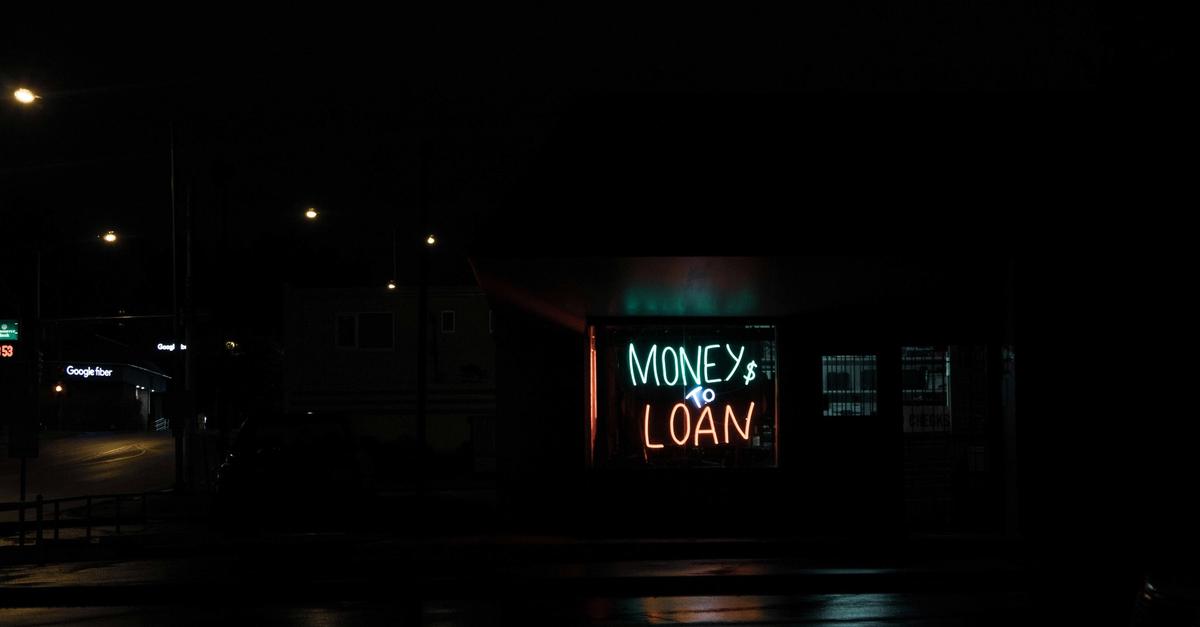
Payday loans are short-term, high-cost loans typically used to cover expenses between paychecks. The concept is simple: you borrow a small amount — usually $100 to $500 — and repay it, plus fees, when your next paycheck arrives. No credit check required, cash available same day. For someone facing an immediate financial shortfall, that accessibility is the appeal.
The problem is the cost. Payday loans are among the most expensive forms of credit available to consumers — often carrying annualized interest rates (APRs) in the range of 300% to 400%, and in some cases significantly higher. That cost, combined with the structure of how they're repaid, traps a large share of borrowers in cycles that are genuinely difficult to break.
How Payday Loans Work
The mechanics are straightforward. You provide the lender with a post-dated check or electronic authorization for the loan amount plus fees, dated for your next payday. When that date arrives, the lender cashes the check or pulls from your account.
The fee structure varies by state, but a typical example: $15 per $100 borrowed. On a $300 loan, that's $45 in fees due in two weeks. Expressed as an APR, $45 in interest on $300 over 14 days equals roughly 391% annually.
Most borrowers don't have $345 available when the loan comes due — which is often why they took the loan in the first place. So they roll the loan over, paying the fee again to extend it another two weeks. Roll it over three or four times and you've paid the original fee amount multiple times without reducing the principal at all.
The Consumer Financial Protection Bureau (CFPB) found that the majority of payday loans are either rolled over or followed by another loan within 14 days of repayment. The "short-term" loan becomes a months-long debt at triple-digit interest.
The Debt Trap Mechanics
The structural problem with payday loans is that they're repaid as a lump sum — principal plus all fees at once — rather than in installments. This repayment structure almost guarantees rollover for borrowers who were already cash-short.
Consider the cycle: you're short on cash, you borrow $300, your next paycheck is $1,200. You repay $345, leaving you $855 for the pay period — still short. You borrow again. Each cycle strips a meaningful percentage of your paycheck before you can apply it to anything else. Over months, the cumulative fees paid can dwarf the original loan amount.
This is categorically different from how most other debt works. Credit card debt is expensive but it's structured to be manageable — minimum payments keep the account current while you work toward payoff. Payday loans are structured to demand full repayment immediately, which is precisely what creates the rollover pressure.
Who Uses Payday Loans and Why
The primary users of payday loans are people with limited or no access to traditional credit — either because their credit score has been damaged by past financial difficulty, because they have thin credit history, or because they don't have a bank account that would qualify them for a credit card or personal loan.
The most common use cases: covering an unexpected expense (car repair, medical bill) when there's no emergency savings to draw on, bridging a gap between paychecks when income timing doesn't align with bill due dates, or avoiding overdraft fees.
The irony is that for many of these situations, a payday loan is actually more expensive than the overdraft fee or late charge it's meant to avoid. A $35 overdraft fee is expensive. A $45 fee on a $300 payday loan that rolls over three times costs $135 for the same period and doesn't resolve anything.
State Regulations and Availability
Payday loan regulations vary significantly by state. Some states cap fees, limit rollovers, or require installment repayment structures. Others have banned payday lending entirely. A handful have effectively no meaningful restrictions.
If you're considering a payday loan, understanding your state's rules matters — both to know what protections you have and to understand what the lender is actually allowed to charge.
Alternatives That Cost Less
If you're facing the kind of short-term cash shortage that makes a payday loan seem necessary, there are typically better options — even for people with damaged credit.
Credit union payday alternative loans (PALs): Federal credit unions are authorized to offer payday alternative loans — small loans ($200–$1,000) with interest rates capped at 28% APR and repayment terms of 1–6 months. Qualification requirements are minimal compared to traditional personal loans. If you're a credit union member, this is the first place to look.
Cash advance from your employer: Some employers offer payroll advances — essentially an advance on wages you've already earned. No interest, no fees. Not universally available, but worth asking about if you have a paycheck coming.
Negotiating directly with the creditor: If the shortfall is due to a bill you can't pay this cycle, many utility companies and medical providers have hardship programs or will defer payment without a fee. The conversation is uncomfortable but the outcome is typically far better than a payday loan.
Credit card cash advance: Expensive — typically 25–30% APR with no grace period — but significantly cheaper than a 300%+ payday loan for a short bridge.
If You're Already in a Payday Loan Cycle
If you're currently caught in a rollover cycle, there are two things worth knowing.
First, in many states you have the legal right to request a payment plan from a payday lender before the loan comes due — converting the balloon repayment into installments at no additional cost. Lenders don't advertise this. Ask.
Second, if payday loan debt is part of a broader debt picture that's become unmanageable — credit cards, collections, other high-interest debt — the cumulative load may benefit from a more structured resolution approach. A debt relief program addresses multiple debt types simultaneously, and a free consultation can clarify whether that's the right fit for your situation in under an hour.
Understanding the full cost of any borrowing — including the APR, interest rate, and fees involved — is the starting point for making a decision that doesn't make the situation worse.
Frequently Asked Questions
Do payday loans affect your credit score?
Most payday lenders don't report to the major credit bureaus, so on-time payday loan payments don't help your credit. However, if a payday loan defaults and goes to collections, the collection account will be reported and will damage your credit score significantly. It's the worst of both worlds — no upside when you pay, real damage if you don't.
Can you get out of a payday loan without paying?
Not without consequences. Lenders can pursue the debt through collections and, in some states, take civil legal action. What you can often do is negotiate the payoff — request a payment plan, or if the loan has been sold to a collector, offer a settlement below the full balance. The outcome depends on the lender and how far along the debt is.
Are online payday loans better than storefront lenders?
Not typically — and online lenders are often less regulated because they operate across state lines in ways that create regulatory ambiguity. Some online payday lenders are based offshore specifically to avoid state lending caps. Scrutinize any online lender carefully before providing banking information.
What happens if I close my bank account to stop a payday lender from withdrawing?
The debt doesn't disappear — it goes into default. The lender may send the account to collections and pursue the full amount plus additional fees. Closing the account can also damage your banking history (reported to ChexSystems), making it harder to open a new account. It's not a solution, just a delay.
Is there any situation where a payday loan makes sense?
In theory — if you're absolutely certain you can repay the full amount on the next payday without creating a new shortfall, and you have no cheaper alternative, the one-time fee cost may be lower than the alternative (an overdraft, a bounced payment, a utility shutoff). In practice, that certainty is rare, which is why so many single payday loans turn into multi-cycle debt.